3 Key Differences in MSME Consumer Behaviour - Qusais, Dubai Vis-a-Vis OMR, Chennai
For an MSME looking to scale, "culture" isn't just a background detail—it is the primary driver of the sales funnel. Having navigated business hubs from Al Qusais, Dubai to the OMR Road, Chennai, I’ve observed three fundamental shifts in how B2B consumers behave.
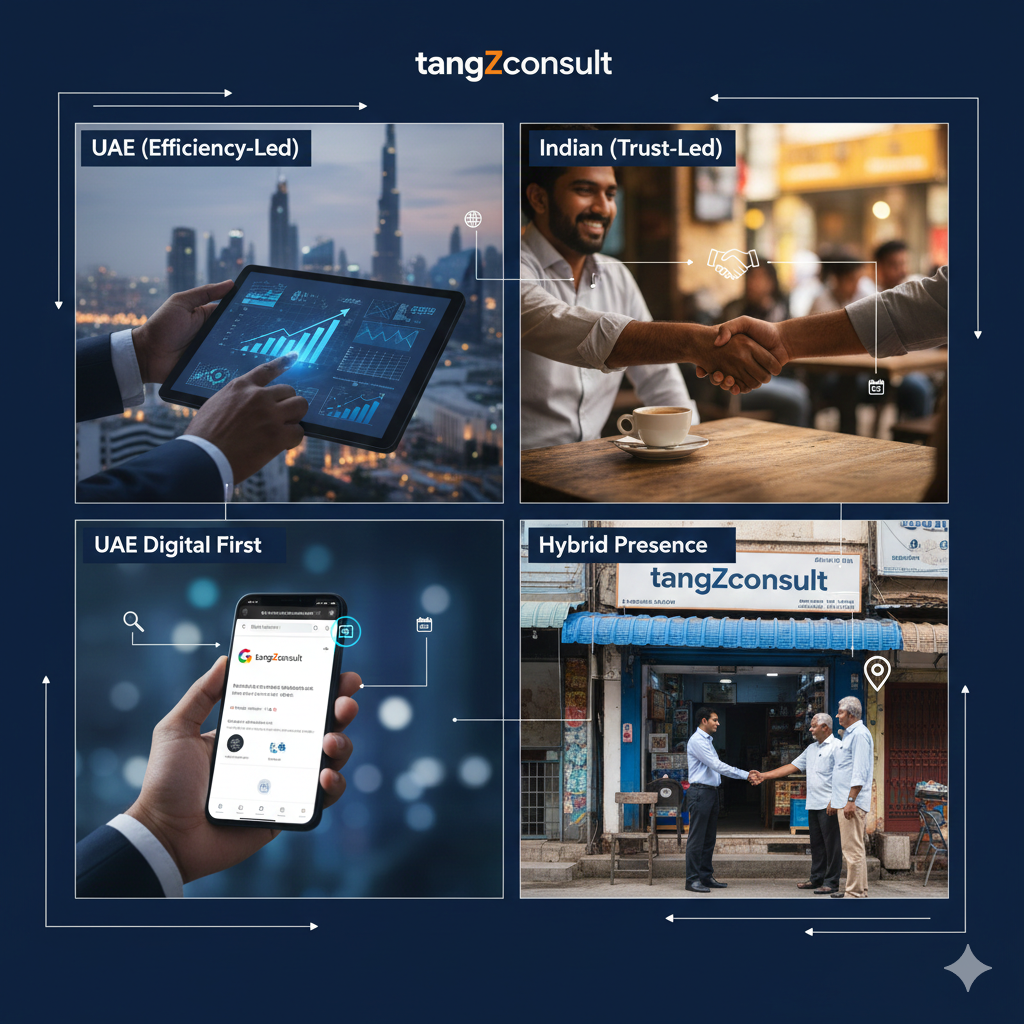
1. Speed vs. Relationship UAE (Efficiency-Led):
In UAE’s MSME sector, the consumer behaviour is transactional and high-velocity. Business owners often prioritize efficiency and speed of delivery. They look for "plug-and-play" solutions. If you can prove ROI quickly, the deal is yours. The UAE market is built on a high-churn, expat-driven economy. Many business owners are there on 2-to-5-year visas or strategic business cycles. Because the timeframe is shorter, they don't have a decade to build a relationship—they need immediate efficiency to maximize their ROI before the next cycle begins.
In India (Trust-Led): In India, particularly within the Chennai MSME ecosystem, the "discovery" phase is much longer. Consumers buy into people before products. Even in B2B, sales are made over multiple conversations and "word-of-mouth" validation. You aren't just a consultant; you are a trusted advisor. In India, MSMEs are often multi-generational or built on deep local roots. Business is viewed as a "long game." Because the legal and contract enforcement systems can be slower than in the UAE, personal trust serves as the informal insurance policy. You don't sign a contract because of the paper; you sign it because you trust the person.
2. Global Aspirations vs. Local Problem-Solving
UAE (The Global Standard): MSMEs in Dubai often view themselves as global players from day one. Their consumer behaviour reflects a desire for international branding and prestige. They want marketing strategies that align with "World Class" standards because their clients are from all over the globe. Dubai is a re-export hub. An MSME in Al Qusais isn't just selling to Dubai; they are selling to the GCC, Africa, and Europe. Therefore, their brand must look global to survive. Branding is a functional requirement for international trade.
India (The Practical Solution): The Indian MSME is deeply pragmatic. Their purchasing behaviour is triggered by solving immediate, local pain points. Whether it’s navigating the logistical chaos of OMR Metro construction decapacitating the transportation or digitising a traditional manufacturing process, they value marketing that is "street-smart" and highly localised. The Indian market is hyper-competitive and price-sensitive. MSME owners are experts at "Jugaad" (frugal innovation). They aren't looking for a "fancy" brand for its own sake; they are looking for a solution that removes a specific bottleneck in their daily operations. If it doesn't solve a today-problem, it’s a tomorrow-expense.
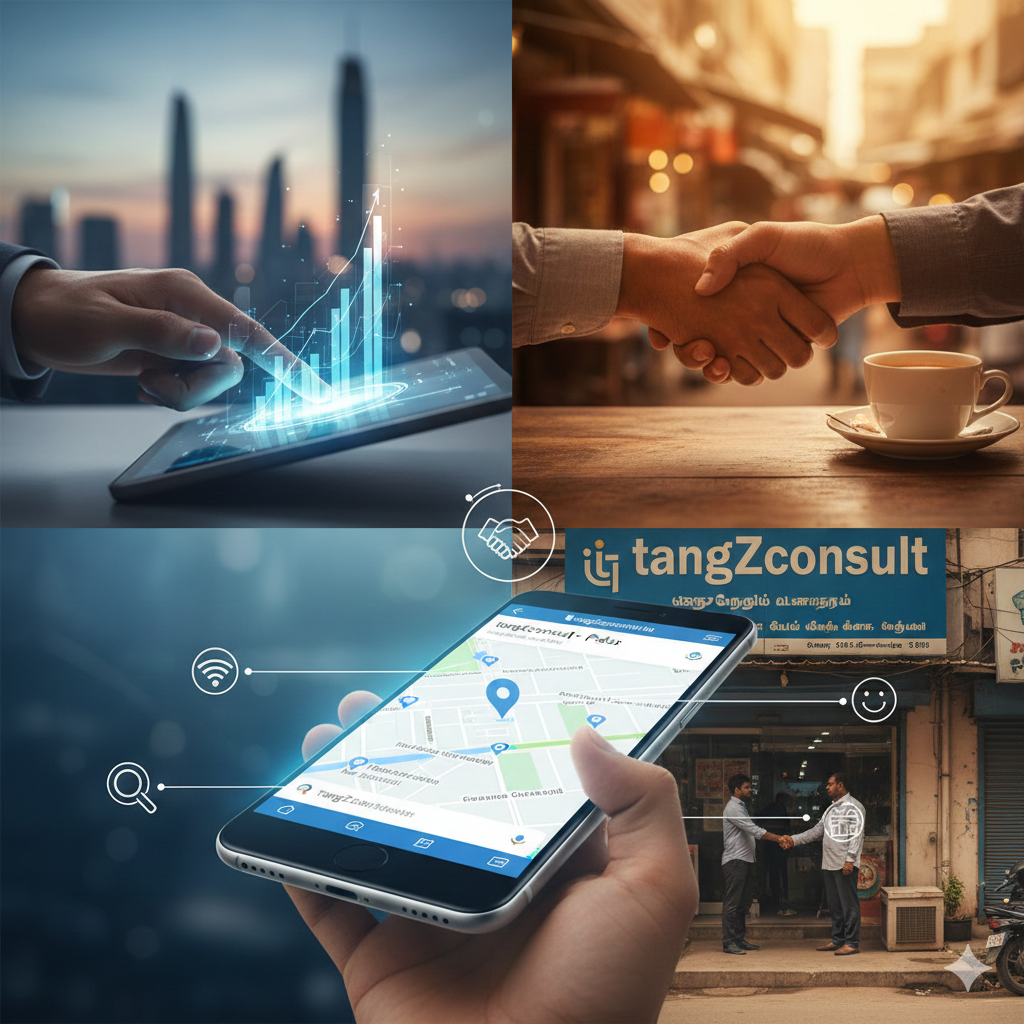
3. Digital Discovery vs. Physical Presence
UAE (Digital First): In the UAE, an MSME’s "First Impression" is almost 100% digital. A consumer will judge your credibility based on your LinkedIn profile and website speed before they ever pick up the phone. High-end digital assets are the minimum entry requirement. The UAE has one of the highest smartphone and internet penetration rates globally. Government services (DEWA, Ejari, Licensing) are 100% digital. This has conditioned the B2B consumer to expect Digital Frictionless-ness. If they can't find you on Google or LinkedIn in 3 seconds, you don't exist.
India (Hybrid Presence): While digital is growing, the Indian MSME consumer still values "Feet on the Street and Hands on ground" They want to know you are reachable in Padur or Siruseri. Despite the "Digital India" boom, Indian business culture remains "High-Touch." In areas like OMR and Siruseri, physical proximity implies accountability. A consumer feels safer knowing they can "visit your office in Padur" if something goes wrong. Digital is the discovery tool, but the physical handshake is the conversion tool.